Davao Electricity Bill: What Renters Actually Pay (DLPC Rates)
Find your bill estimate:
- No AC, fan only → PHP 1,000–1,900/month. Budget-friendly baseline.
- Light AC (4–5 hrs/day, inverter) → PHP 2,500–4,400/month. Most BPO day-shift workers (see BPO housing costs for how this fits salary tiers).
- Moderate AC (6–8 hrs/day, inverter) → PHP 3,800–6,300/month. Comfortable for couples.
- Heavy AC (8+ hrs, non-inverter) → PHP 5,700–8,850/month. Night-shift workers, WFH without inverter.
- 2-bedroom, family → PHP 7,000–9,500/month. Two AC units running.
Electricity is the second largest monthly expense for most Davao renters, right after rent itself. A studio with no air conditioning might pay under PHP 1,900, while a 2-bedroom unit running AC through the night can clear PHP 9,000. The difference comes down almost entirely to one appliance.
DLPC (Davao Light and Power Company) currently charges ₱13.09/kWh (July 2026 cycle; ₱10.30–13.09 over 7 cycles) ↗ for residential customers. That is the top of the observed range, not the middle of it — the rate climbed 26.5% in two cycles, from ₱10.35 in May to ₱12.30 in June to ₱13.09 in July. If you are budgeting off a figure you read earlier this year, it is too low. Here’s what the current rate actually means for your monthly bill, and how to control it. For a full picture of living expenses beyond electricity, see the cost of living guide.
How Much Is Electricity in Davao per Month?
Most renters in Davao pay between PHP 3,200–9,500/month (July 2026 rate) for electricity, with the range driven almost entirely by air conditioning habits. A solo renter in a studio who runs a fan instead of AC sits at the low end. A couple in a 1-bedroom running a 1.5HP unit through the night lands at the high end.
| Category | Range (PHP) | Notes |
|---|---|---|
| Studio, no AC (fan + lights + fridge) | 1,000–1,900 | ~80–140 kWh |
| Studio, light AC (inverter, 4-5 hrs/day) | 2,500–4,400 | ~190–330 kWh |
| 1-Bedroom, moderate AC (inverter, 6-8 hrs/day) | 3,800–6,300 | ~280–470 kWh |
| 1-Bedroom, heavy AC (non-inverter, 8+ hrs/day) | 5,700–8,850 | ~420–660 kWh |
| 2-Bedroom, family usage (2 AC units) | 7,000–9,500 | ~520–700 kWh |
Estimates as of July 2026 cycle (₱13.09/kWh). Actual costs vary by building, usage, and lifestyle.
The kWh figures above are unchanged from earlier in the year — the peso figures moved because the rate did, not because anyone started using more power. These assume the current DLPC residential rate of ₱13.09/kWh (July 2026) . Your actual bill also includes transmission, distribution, and universal charges bundled into the per-kWh rate — you don’t pay these separately.
How DLPC Rates Work and Why Your Bill Fluctuates
Davao Light and Power Company (DLPC), a subsidiary of Aboitiz Power, is the sole electricity distributor for Davao City.
Your bill rate isn’t fixed, it changes every billing cycle based on how much DLPC pays its power suppliers.
The biggest variable is the generation charge, driven by prices on the Wholesale Electricity Spot Market (WESM). When power plants go offline for maintenance or demand spikes, WESM prices rise and your rate follows. Through 2026 the residential rate drifted in a narrow band for four months, then broke out sharply in June:
| Billing Period | Rate (PHP/kWh) | Change |
|---|---|---|
| December 2025 | 9.71 | — |
| January 2026 | 11.72 | +2.01 (plant outages) |
| February 2026 | 10.30 | −1.42 (WESM normalized) |
| March 2026 | 10.63 | +0.33 |
| April 2026 | 10.53 | −0.10 |
| May 2026 | 10.35 | −0.18 (lower transmission charge) |
| June 2026 | 12.30 | +1.95 (+18.8% — WESM spike) |
| July 2026 | 13.09 | +0.79 (12-month high) |
Two things drove the June–July spike, and both are supply-side rather than anything you did: multiple major power plants went offline across the country, and the magnitude 7.8 Southern Mindanao earthquake on 8 June 2026 disrupted generation facilities while demand stayed high. Davao Light has been explicit that distribution charges did not change — the increase is entirely generation cost passed through.
Budget against the top of the range right now, not the midpoint. A bill computed at ₱10.35 will land roughly 26% short of what you actually owe.
Seasonal patterns: Bills tend to peak in March-May (Davao’s hottest months), when renters run AC longer and ambient temperatures force compressors to work harder. A unit that costs PHP 3,000/month in December may hit PHP 4,500 in April with the same usage hours, because the AC draws more power cooling from 34°C versus 30°C outside.
January 2026 was an outlier driven by DLPC supply-side costs, not weather.
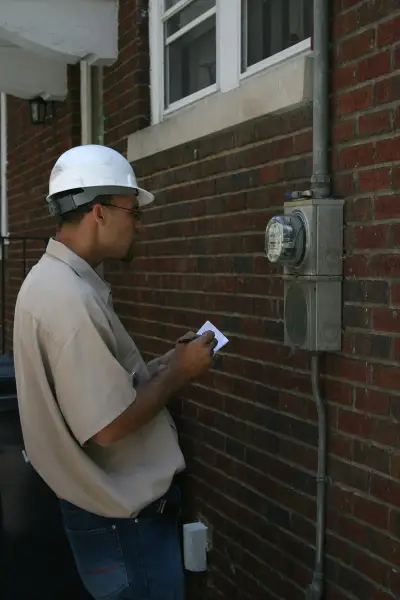
DLPC bills monthly. Meter readers visit your unit on a fixed schedule, and you’ll see the reading dates on your billing statement.
Late payment adds a 2% surcharge on your next bill. You can track your usage and pay through the MobileAP app (Aboitiz Power’s customer portal).
Air Conditioning Is the Biggest Variable
AC typically accounts for 50–70% of a Davao renter’s electricity bill. The calculation is straightforward: wattage ÷ 1,000 × hours × days × rate per kWh = monthly cost. But the type of AC unit you use makes a dramatic difference.
| Category | Range (PHP) | Notes |
|---|---|---|
| 1.0 HP inverter (6 hrs/day) | 1,400–1,900 | ~500W avg draw after ramp-down |
| 1.5 HP inverter (8 hrs/day) | 2,500–3,800 | ~700W avg draw; most popular renter size |
| 1.0 HP non-inverter (6 hrs/day) | 2,150–2,800 | ~750W constant draw |
| 1.5 HP non-inverter (8 hrs/day) | 4,400–6,300 | ~1,100W constant draw |
| 2.0 HP non-inverter (8 hrs/day) | 5,700–7,600 | ~1,500W; oversized for most studios |
Estimates as of July 2026 cycle (₱13.09/kWh). Actual costs vary by building, usage, and lifestyle.
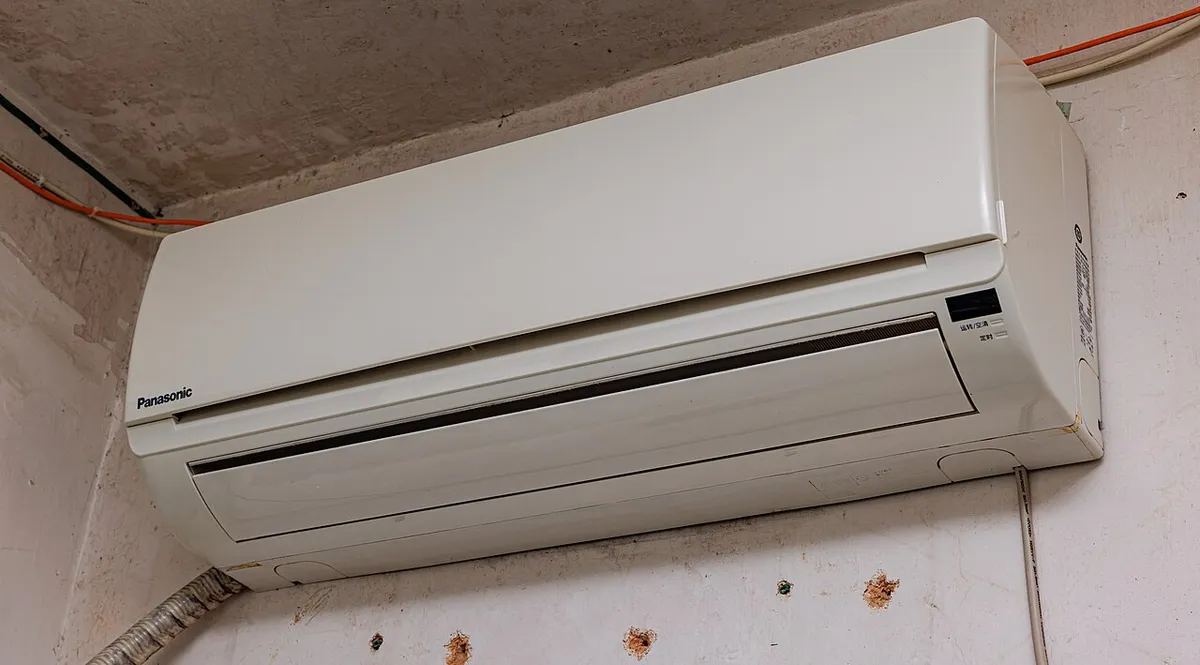
Why inverters cost less to run: A non-inverter compressor runs at full power until the room hits target temperature, then shuts off completely, then restarts when the room warms up. Each restart draws a power surge. An inverter compressor ramps down to low power once the room cools, maintaining temperature without cycling on and off. In Davao’s climate, where you’re cooling from 32°C outside to 25°C inside — the inverter spends most of its time at reduced power.
What Other Appliances Cost You Each Month
AC dominates the bill, but other appliances add up. Here’s what the common ones cost at DLPC’s current rate:
| Appliance | Typical Wattage | Daily Use | Monthly Cost (PHP) |
|---|---|---|---|
| Refrigerator (inverter) | 80–150W | 24 hrs (cycles) | 320–570 |
| Refrigerator (non-inverter) | 100–200W | 24 hrs (cycles) | 500–890 |
| Electric water heater | 1,500–3,000W | 30 min | 320–630 |
| Washing machine | 300–500W | 1 hr, 3x/week | 150–250 |
| Electric fan | 50–75W | 8 hrs | 165–250 |
| LED lighting (5 bulbs) | 50W total | 6 hrs | 125–150 |
| Laptop + router | 80–120W | 10 hrs | 330–480 |
| Rice cooker | 400–700W | 1 hr | 165–280 |
The refrigerator runs 24/7 and is your second-largest consumer after AC. If your unit came with an old non-inverter fridge, that alone can add PHP 300–400 per month versus a modern inverter model.
How to Lower Your DLPC Bill
The gap between a PHP 2,500 bill and a PHP 6,000 bill usually comes down to a handful of habits and one equipment choice. For the full deep-dive with before/after budget tables, seasonal patterns, and shared meter rights, see the complete electricity savings guide.
AC management, the biggest lever:
- Set the thermostat to 25–26°C, not 18°C. Every degree lower adds roughly 6% to your AC’s power consumption.
- Use a timer to shut off AC after you fall asleep. Four hours of cooling often carries a bedroom through the night.
- Clean filters every 2 weeks. Clogged filters force the compressor to work harder, adding 10–15% to consumption.
- Keep doors and windows sealed while AC runs. A gap under the door bleeds cool air into the hallway.
Other savings:
- Unplug chargers, TVs on standby, and unused appliances. Phantom loads add PHP 100–200 per month across a typical apartment.
- Use LED bulbs everywhere. Five LEDs running 6 hours cost roughly PHP 100/month versus PHP 400+ for incandescent equivalents.
- Run the washing machine on full loads only, and air-dry clothes. Davao’s heat handles drying faster than a dryer.
Mall strategy: SM Lanang Premier, Abreeza Mall, and SM City Davao all have free AC and wifi. Many renters, especially remote workers and students, spend afternoons in malls to cut home AC hours. It’s a genuine cost-saving move, not just a joke.
Budget your total monthly cost:
- Full cost of living breakdown → complete guide
- Water bill details → DCWD guide
- Internet by area and provider → Converge vs PLDT vs Globe
- Living on PHP 20,000/month → extreme budget guide
Ang Tinuod sa Kuryente
Electricity in Davao is manageable if you understand the one factor that matters most: air conditioning. Choose an inverter unit, run it with discipline, and the rest of your appliances barely move the needle.
For a breakdown of all monthly utility costs, water, internet, and phone, see the cost of living guide. Water costs are covered in the DCWD water bill guide, and internet options by area in the Converge vs PLDT vs Globe comparison.
If you’re setting up utilities for the first time, the utilities setup guide covers the full connection process including DLPC meter deposits. For renters on tight budgets, the PHP 20,000/month living guide shows how to keep electricity costs under PHP 2,000.
Frequently Asked Questions
- How much is electricity per month in Davao City?
- Most renters pay PHP 3,200–9,500 per month depending on air conditioning usage. A studio without AC can run under PHP 1,900. DLPC's residential rate is PHP 13.09 per kWh for the July 11–August 10, 2026 billing cycle — a 12-month high.
- What is the current DLPC rate per kWh?
- The DLPC residential rate for the July 11–August 10, 2026 cycle is PHP 13.09 per kWh, up from PHP 12.30 in June and PHP 10.35 in May — a 26.5% rise across two cycles. Davao Light attributes it entirely to generation charges from the Wholesale Electricity Spot Market, driven by nationwide plant outages and the magnitude 7.8 Southern Mindanao earthquake on June 8, 2026.
- Why did my Davao electricity bill suddenly go up in 2026?
- The DLPC rate rose from PHP 10.35/kWh in May 2026 to PHP 12.30 in June and PHP 13.09 in July — about 26.5% in two billing cycles. Your usage may not have changed at all. The increase is generation cost passed through from the spot market after multiple power plant outages and the June 8, 2026 earthquake. Davao Light has suspended disconnections until October 2026.
- How much does running an aircon cost per month in Davao?
- At the July 2026 rate of PHP 13.09/kWh, a 1.5HP inverter AC running 8 hours per day costs roughly PHP 2,800–3,800 per month. The same usage on a non-inverter unit runs PHP 4,400–6,300. AC is typically 50–70% of a renter's total electricity bill.
- Is electricity in Davao more expensive than Manila?
- At PHP 13.09/kWh for the July 2026 cycle, Davao's DLPC rate is now close to or above typical Meralco residential rates, having historically sat slightly below them. The June–July 2026 spike narrowed a gap that used to favour Davao. Usage still differs — Davao's climate means somewhat less AC dependency than Metro Manila.
- How do I get a DLPC electricity connection for a new apartment?
- Contact DLPC or visit a customer service center with two valid IDs, your lease contract, and the unit's electrical permit. Expect a meter deposit of PHP 2,000–4,500 depending on the unit's load capacity. Processing takes 3–7 business days.